
The Ultimate Guide for Businesses in the Global Economy
As globalisation and outsourcing continue to reshape how companies operate, businesses are rapidly turning to offshore and remote hiring to reduce their costs and scale very quickly. Alongside this trend comes a rise in scrutiny on corporate ethics and values. Labor practices, labor conditions, and cultural missteps become worldwide discussions about what constitutes ethical outsourcing. The question remains: Is it worth saving a buck to betray your brand values?
In today’s business landscape, the interconnected world in which we now live, and the drive from younger generations towards social justice, the focus on ethical considerations is more intense than ever. The investors, consumers, and employees want accountability. In practice, this means offshoring and outsourcing are not just cost-cutting techniques; they are windows into your company’s ethics and values.

Not just labor arbitrage and transactional contracts, Ethical offshoring goes way beyond. It’s about being mindful when making choices about outsourced or subcontracted work; fair trade outsourcing principles that include fair payment and safe working conditions, respect for workers’ rights, and transparency.
In contrast to exploitative outsourcing, which values profit over people, moral outsourcing values both equally. StaffDomain and the latest Forbes pieces showcase firms that are committed to ethical outsourcing by providing clear contracts and upholding fair employment across borders. This is a way to create greater awareness of corporate ethics and values, promoting trust and long-term relationships.

For companies who does businesses outsourcing to low-cost regions, they may realize savings in the short term, but the long-term costs of living unethically are more subtly concealed. Reputation harm, Brand boycotts, and Brain drain: Repercussions for business when ethical values for business are compromised.
Yet too many decision makers turn a blind eye to these hidden costs for the sake of faster growth. But the negative reactions to unethical offshoring and outsourcing — if workers have poor working conditions, or are even exploited — can do more to damage brand equity than to save on a payroll. Conducting Ethical outsourcing is not only the right thing to do, it’s a business strategy that safeguards brand image.
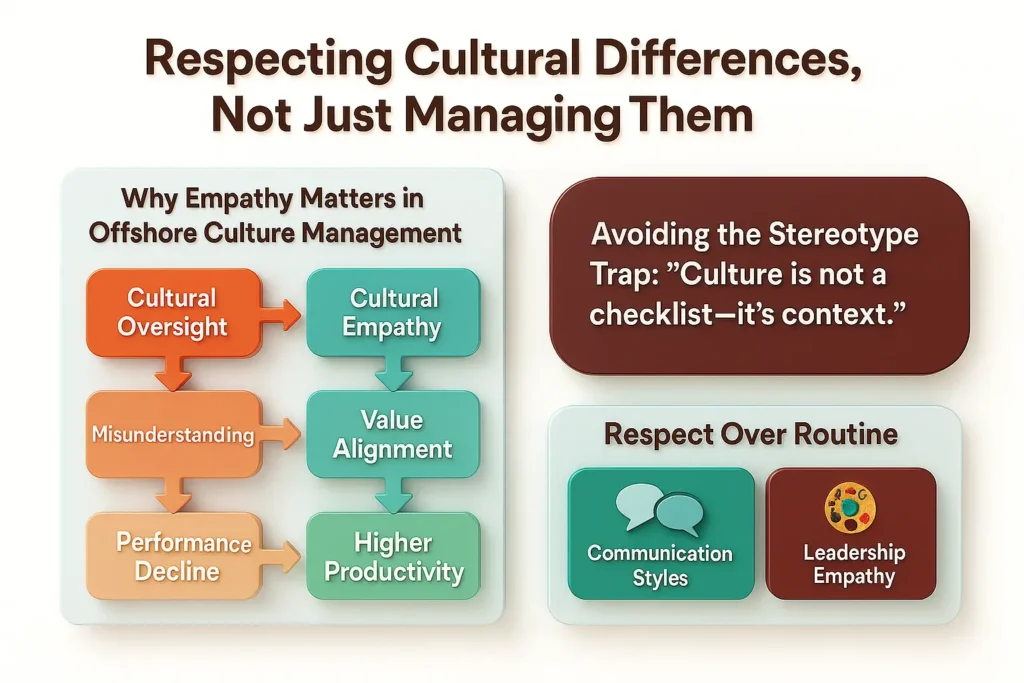
Outsourcing offshoring is not just about bridging the gap between time zones or accounting for holidays. It requires cultural empathy, i.e., communication styles, understanding the values and different religious practices of your offshore team. This is the exact aspect where companies go wrong.
And, according to HBR’s “Values in Tension” research, failing to account for cultural nuances can damage trust and productivity. At a time when many companies are focusing on empathy and cultural intelligence, those that stereotype a culture down to some bullet-pointed list of must-dos are selling their employees short. It is part of business and business ethics in global operations.
Environmental fallout from outsourcing and offshoring is typically not considered. And yet, responsible tech use, energy-efficient practices and sustainable sourcing can make or break a company’s public image.
The Maryville and CSVNow studies highlight the necessity for companies to factor in the carbon footprint of their offshore operations. From absentee server farms to heavy emissions from transport, it’s ethical values for business that now needs to be considered.

Exploitation occurs wherever there are power imbalances, especially in areas with weak labor laws and little enforcement. Companies often participate in a “race to the bottom,” selecting vendors that provide the lowest prices without checking labor practices.
Clark Outsourcing and ResearchGate publications show how corporations, sometimes unwittingly, perpetuate inequality through those choices. Integrity Outsourcing recognises these imbalances and addresses them with equitable contracts, living wages, and human rights audits.
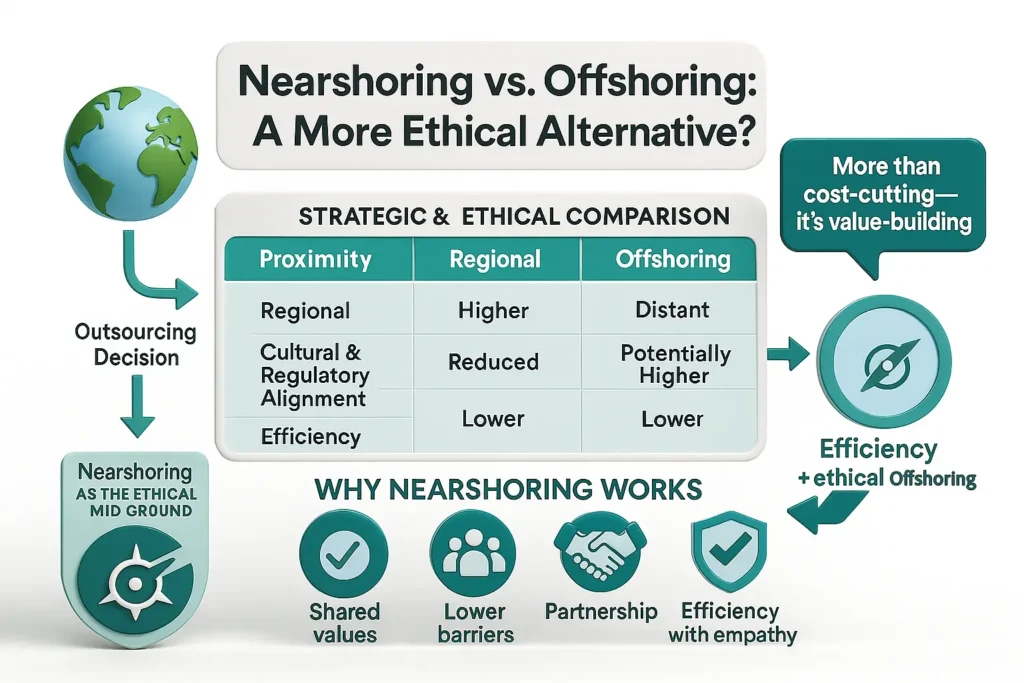
Nearshoring, for many companies, is a middle ground. Through outsourcing processes to other countries that share common standards and values, businesses can overcome language barriers, gain greater control over its outcomes, and decrease negative ethical considerations.
Heinsohn and Vanguard-X illustrate that nearshoring drives greater partnership and shared accountability. It is also way more in touch with business and business ethics, giving companies a tangible model for being efficient while still prioritizing values.
A contract is not enough. For ethical offshoring, businesses need to implement forms of accountability: third-party audits, whistleblower policies and public disclosures.
Outlets like InsideHR, and the HWA Alliance recommend going over and above the legal to seek out ethical certifications and provide regular labor reports. Businesses outsourcing makes transparency routine, not a P.R. move.
Firms such as Basecamp and Unilever have won plaudits for the clear standards and ethical approaches to offshoring. There are also other tactics they use by paying well, getting their offshore teams to make decisions, and performing frequent audits.
On the other hand, labor problems faced by Foxconn with regard to Apple have also indicated that no company appreciates the trade mark using unethical means. These examples from behind the scenes emphasize why ethical considerations should be woven throughout the fabric of your global plan.
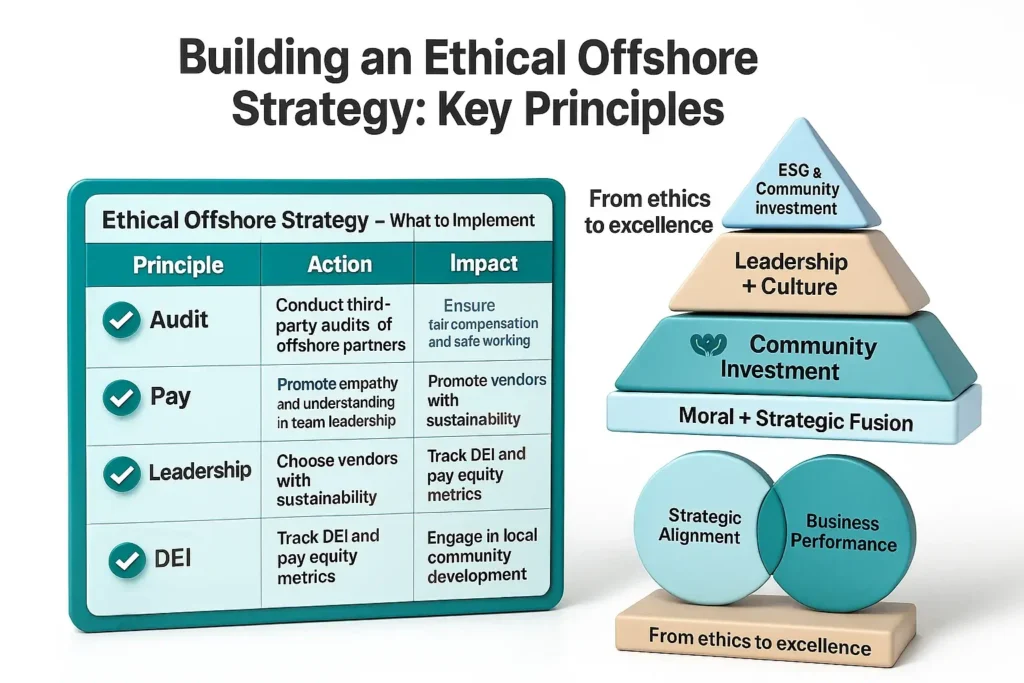
To align purpose with profit, companies must proactively integrate ethical values for business. Here’s a checklist to start:
The above steps combine both moral outsourcing and smart business practices, which help in strengthening both performance and reputation.

In an era of offshoring and outsourcing, how your company manages labor, culture, and sustainability becomes part of your legacy. Cost should never be the only factor in your offshore decisions. Your stakeholders are watching, and your values are at stake.
Are you projecting your values — or fleeing them — when you offshore? The future of business rests with going global, not just outsourcing, but doing integrity outsourcing with empathy and responsibility.
Join thousands of businesses leveraging offshore staffing to scale their operations globally
Expand effortlessly with My Offshore Employees - access top 1% offshore talent starting at just $3/hr or $600/month per FTE. No hidden fees, no compromises on quality. Your offshore employees work exclusively for you - ensuring focus, transparency, and real-time visibility into your projects. We combine smart automation and proven industry experience to deliver higher productivity, fewer errors, and tailor-made solutions for your business growth.

© 2022-Present MyOffshoreEmployees.com – A brand of iWebGenics Pvt. Ltd. (India)